Many people wonder how to become a general contractor in California after years of working for others. It is a possible path, but it has clear steps and a real cost.
This educational guide walks through that path: experience, the CSLB exam and license, insurance, credit, first jobs, and up-to-date books. We use an illustrative example with a made-up character.
In short
- Being the boss doesn't mean working less: it means carrying the responsibility for the whole business.
- The General Contractor license requires proven experience, exams, a bond and insurance.
- Credit and cash flow are key to paying for materials before you get paid.
- If you hire employees, you need formal payroll and workers' comp.
- Getting your books in order from the first job prevents costly mistakes.
The path: from worker to owner
Illustrative example: imagine a construction worker named Luis. He is a made-up character for this guide and does not represent any real person.
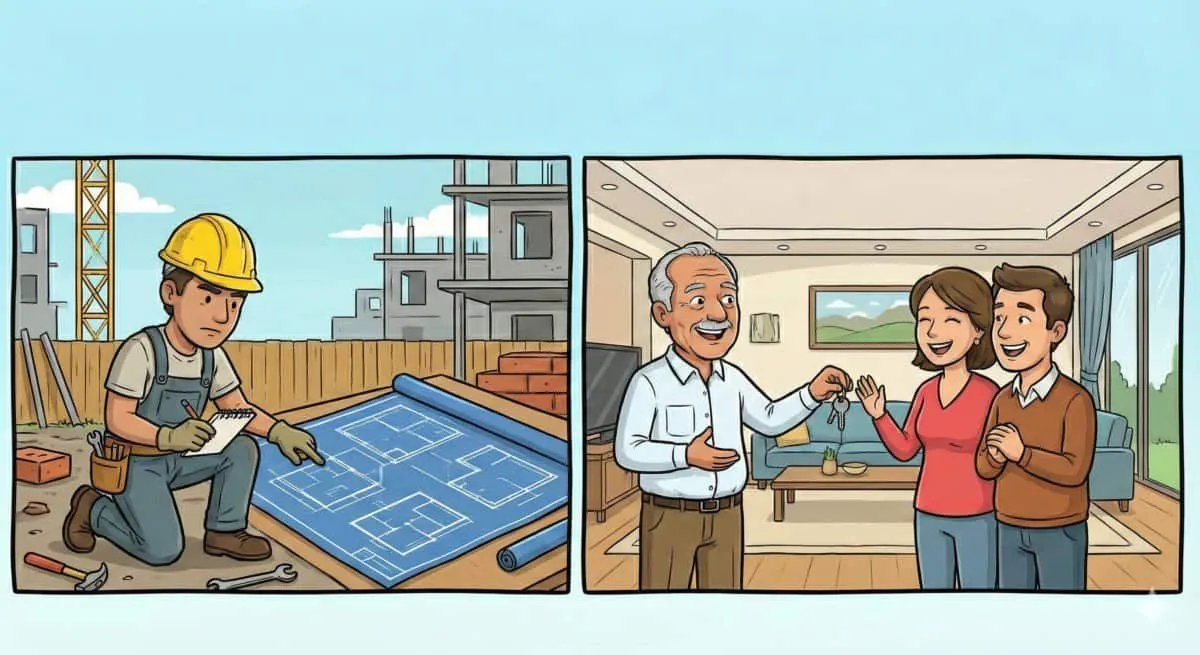
Luis has spent years on job sites: first as a helper, then a journeyman, and then a crew foreman. There he learns the value of hard physical work. But being an owner demands another change: a change of mindset.
Being the boss doesn't mean working less. It means carrying the responsibility for the whole business: the job, the people, the money, and the paperwork.
Many workers take this step to give their family better opportunities. That means studying, building provable experience, and leaving the comfort of being an employee to take on the risk of an owner.
General contractor license in California: the first filter
The license is the first big filter, especially in a strict state like California. Paying a fee is not enough: you have to prove experience and knowledge.
If you are asking how to become a general contractor in California, start with the CSLB requirements (the state agency that issues contractor licenses). Luis would need to gather documents that prove his years of work, prepare for the exam, and submit his application.
Basic CSLB license requirements
| Requirement | What the CSLB asks for |
|---|---|
| Experience | 4 years at the journey-level, as a supervisor, owner or contractor, in the last 10 years. CSLB source |
| Exams | Law and business exam, and trade exam |
| Bond | $25,000 contractor license bond. Source: CSLB |
| Workers’ comp | A policy if you have employees, or an exemption if you don't. CSLB source |
| LLC | Additional bond and required liability insurance |
Always confirm the current requirements on the CSLB website before you apply. If you are looking for a B (general) contractor license, also check which classification you need.
When do you need a license?
In California you need a license if the job costs $1,000 or more in labor and materials. Since 2025 you also need one if the job requires a building permit or if you use workers, even if it costs less. More detail in the CSLB bulletin on AB 2622.
Insurance and bond: what backs your license
The bond is a guarantee that backs your license with clients. Workers' comp is workers' compensation insurance. If you don't keep these requirements current, your license can be suspended.
An insurance agent can quote you the bond and explain how much you would pay each year. If you later form an LLC, additional requirements may apply. Your attorney and your agent handle that structure, not ODC.
Credit and liquidity
With the license comes financial reality. You need business credit to buy materials and pay subcontractors before the client pays you. That is construction cash flow: the money that comes in and goes out of your accounts.
Banks and suppliers often look at your history and your numbers. That is why it helps to separate personal and business accounts early.
Example: Luis closes a $30,000 concrete job. He pays $12,000 for materials and $9,000 for the crew in the first 3 weeks. The client pays in 45 days and holds back 5% ($1,500) until the end.
He needs at least $21,000 in cash or credit to get through that wait. Retention (retainage) is the part of the payment the client holds back until the job is done.
Up-to-date books show you how much cash you need on each job. Read profitability for contractors and see how bookkeeping helps you.
First jobs and managing staff
First jobs are usually small and for clients close to you. They are your chance to test your prices, your contracts, and how you collect. A written contract defines scope, price, and payment dates.
When Luis hires helpers, hiring cheap can get expensive. It makes sense to use formal payroll and carry workers' comp. Payroll is processed by an independent partner, not ODC.
In California, the CSLB requires workers' comp if you have employees, or an exemption if you don't. If your coverage expires, your license is suspended. Read workers' comp in California.
Books up to date from the first job
A bookkeeper keeps a record of every income and expense in your business. That way you know what came in, what went out and what you're owed.
Imagine Luis closes three small jobs in one month. This is an illustrative example. Without records, it is easy to forget a material receipt or a payment to a helper.
- Save every invoice and receipt in a digital folder.
- Write down who owes you and since what date.
- Keep what you collect separate from the money you set aside for taxes.
These habits don't cost much. They give you clarity when it's time to apply for credit or explain your numbers to a bank.
The price of independence
Being an owner brings freedom, but also risks. The client may pay late, a job may cost more than expected, and expenses keep running even when no money comes in. That weighs on cash flow and on your family's peace of mind.
Three habits help manage that risk, based on the common sense of many contractors:
1. Separate your accounts from day one. Mixing personal and business money makes everything harder later.
2. Figure out your cash before you take a big job. A good job can sink you if you can't wait for the payment.
3. Get advice before, not after. A tax preparer, an insurance agent and a lawyer cost less than a mistake.
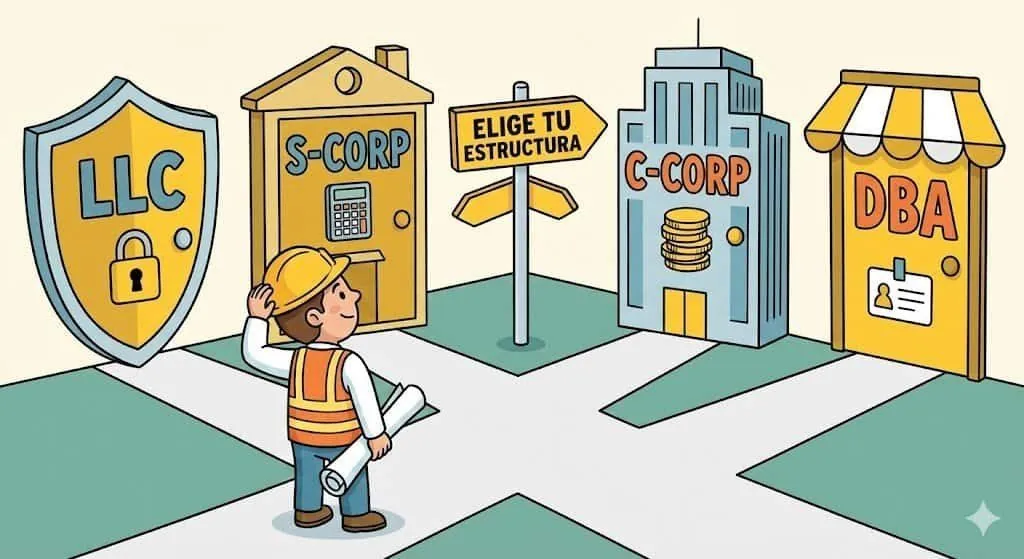
To choose your structure, read LLC, S-Corp, C-Corp, or DBA. To see what people who make the leap have in common, read The Leap.
Common mistakes when making the leap
These mistakes show up often when a construction worker becomes a contractor. Knowing them helps you avoid them.
- Charging only for the cost of materials. You forget your time, your insurance, and the days without work.
- Starting without a license. Check the CSLB rules for your type of work first.
- Taking jobs without a written contract. A clear contract sets the scope, the price, and the payment dates.
- Spending the deposit on things unrelated to the job. That money is for materials and crew.
- Leaving paperwork for later. Payments, receipts, and insurance papers get lost fast in the middle of a job.
None of these mistakes is a life sentence. With good organization and good advice, most can be fixed in time.
What to do now
- Check with the CSLB which license classification you need.
- Gather proof of your trade experience.
- Figure out how much cash you need to last 45 days without getting paid.
- Ask an insurance agent for a bond and workers' comp quote.
- Open a bank account just for the business.
FAQ
How much experience do I need for a General Contractor license?
The CSLB requires at least 4 years of experience at the journeyman, foreman, supervisor, owner or contractor level within the last 10 years. You must be able to prove it with documents. Confirm the current details on the CSLB website before you apply.
How much is the license bond?
The contractor license bond in California is $25,000. Additional bonds may apply, for example for an LLC. An insurance agent can quote the bond and explain how much you would pay for it each year.
Can I work without a license?
In California you need a license if the job costs $1,000 or more in labor and materials, if it requires a building permit, or if you use workers. Working without a license can bring penalties, so confirm your case with the CSLB.
When to talk to a professional
This article is a general guide. If your case involves a letter from the IRS, the FTB or the EDD, a lawsuit, an accident or a change in your business structure, talk to a lawyer, a tax preparer (CPA or enrolled agent) or the official agency. Every case is different.
How ODC helps you
At Oficina del Contratista we keep your bookkeeping up to date: we record your income and expenses, reconcile your accounts and explain your reports in Spanish. For taxes, payroll, insurance or legal matters, we connect you with independent partners; they provide those services, not ODC. See all services.
Are you getting your license or forming your company? We connect you with partners and organize your books from the start. Message us on WhatsApp.
References
- CSLB – Experience requirements — 4 years of experience in the last 10
- CSLB – Bond requirements — $25,000 license bond
- CSLB – Workers' compensation requirements — Workers' comp or exemption
- CSLB – Forms and applications — Application forms
- CSLB – AB 2622 Implementation (PDF) — $1,000 threshold for requiring a license

Runs Oficina del Contratista, a Spanish-language bookkeeping service for contractors. Has experience in management, sales and construction consulting.
Important notice: this article is educational and informational only; it is not legal or tax advice. It may contain errors or be out of date. Before making decisions, check it with a licensed expert or attorney.