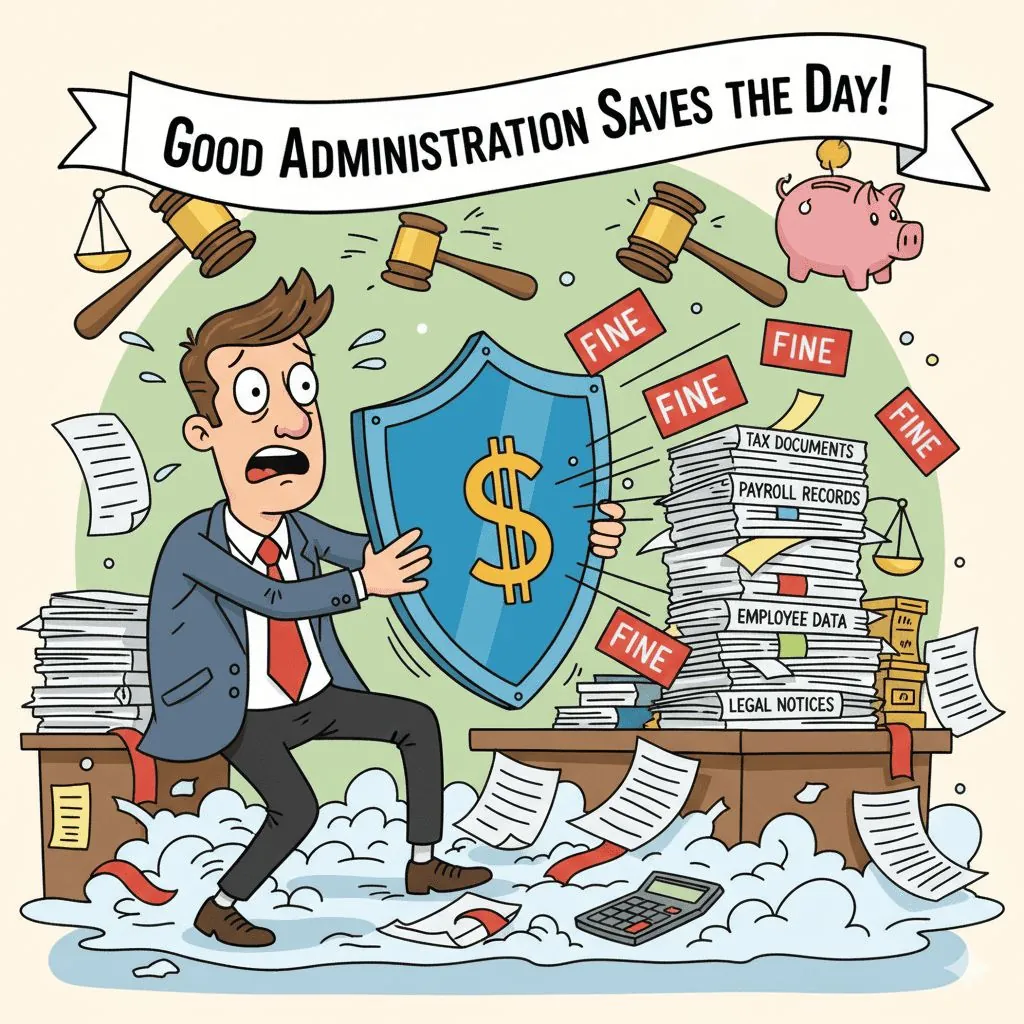

You have a big job, the customer is squeezing the price, and you think: "if I pay my guys in cash, I keep more." It is a common temptation in roofing, concrete, landscaping, remodeling, and cleaning.
This article is for construction and service business owners who pay, or have thought about paying, their crew "cash." You will see what risks exist, what is true and what depends on each case, and how to set prices so you do not need shortcuts.
This is general, educational information, not legal or tax advice. For your case, confirm with an attorney, a tax preparer, CPA, or enrolled agent, or with the official agency.
In short
- Paying with cash is not the problem in itself. The problem is paying without recording, withholding or reporting the payroll.
- If you have employees, you normally must withhold and deposit payroll taxes and carry workers' compensation insurance (Workers' Comp).
- Salaries can be deductible, but only if they are real business expenses and you can prove them with records.
- An injured worker without coverage can cost you a lot. What is or is not covered depends on the policy and on each case.
- The underlying fix is usually pricing: charge for all your real costs.
Paying in cash: what is true and what is not
First, a clarification. Cash is not illegal in itself. An employee can be paid by whatever method you agree on, as long as the pay is on payroll, with withholdings, a pay stub, and reporting to the agencies.
The risky part is "cash under the table": paying without payroll to avoid taxes and insurance. That is what this article calls "the myth." Let's see why the supposed savings are fragile.
Risk 1: audits, taxes, and payroll penalties
If a worker is an employee, you normally must withhold taxes, pay your share as the employer, and report it. That is how the IRS explains it in its payroll recordkeeping guidance, which asks you to keep employment records for at least four years.
There is no single way you get found. According to specialized firms, one of the most common ways the EDD (California's unemployment agency) reviews a business is when a former employee files for unemployment benefits and does not show up in your reports. There can also be random reviews or tips from third parties.
If there is a determination, the agency can collect back taxes, interest, and penalties. The amounts depend on the case, the period, and whether it is considered a mistake or an intentional omission.
Risk 2: an accident without Workers' Comp insurance
In California, a business with employees generally must carry workers' compensation insurance. If it doesn't and a worker gets hurt, the DIR explains that there is a fund (the UEBTF) that pays benefits to workers of uninsured employers, and then seeks reimbursement from the employer.
The law also provides penalties. Under California Labor Code section 3722, when a stop order is issued for having no insurance, a $1,500 penalty per employee is also imposed, and in some cases it can be higher.
Example: a helper falls off a roof and was not on your payroll. If there is no coverage, medical costs and benefits can fall on you. What each policy covers or denies (including your liability policy) depends on the wording of your contract. Ask your insurance agent before something happens.
Risk 3: do you pay more taxes? It depends on how you record it
Here it pays to be exact. Wages can be a deductible expense if they are ordinary, necessary, reasonable, and you can prove them. IRS Publication 583 explains why records are the basis of what you report on your return.
Paying in cash does not automatically make wages "non-deductible." But without checks, payroll, or receipts, it is hard to prove. If you don't report it, your profit on paper stays higher. If you report it without support, you risk having it disallowed. And you would also have an unreported payroll tax issue.
Which of the two scenarios applies depends on how you kept your books and on your situation. A tax preparer, CPA, or enrolled agent can review it with you.
Risk 4: you lose good workers
Many workers want to prove income to rent, get a car loan, or buy a home, and they want their hours reported. A business with formal payroll is usually more attractive to them. It is not a rule for everyone, but it is one more practical reason.
The root cause: prices that do not cover your real costs
Many owners pay "cash" because the numbers don't add up for them. That is usually a pricing problem, not a tax problem. Operating formally costs more, and those costs must be in your quote.
Your price should cover, at a minimum:
- Materials.
- Labor (gross wages).
- Payroll taxes that are your part as an employer.
- Workers' Comp insurance
- General Liability insurance.
- Overhead: gas, tools, phone, office.
- Your profit, included from the start and not "whatever is left over."
A customer who only wants a price "in cash" may not be the right customer for your business. Customers who value an insured, compliant contractor usually accept a fair price.
If you want to see how to measure the real profitability of a job, read our article on finances and profitability.
Watch the video on YouTubeWhat to do now
- Make a list of who works for you and how you pay them today.
- Ask an attorney or a tax preparer whether each person is an employee or a contractor. Also see 5 points to determine whether someone is an employee.
- Confirm with your insurance agent that your Workers' Comp policy is active and that it reports the correct payroll.
- Keep receipts, proof of payment, and time records for each worker.
- Recalculate your prices with all the costs from the list above.
When to talk to a professional
If you already paid in cash without reporting it, talk soon with a labor attorney or a tax preparer, CPA, or enrolled agent. They can explain your options before an agency contacts you.
How ODC helps you
At ODC, we keep your books up to date (bookkeeping) so you can see your real costs and set prices that leave a profit. You can learn about the service at Clean Profit. For payroll, we work with independent partners; start at our payroll page.
References
- IRS: Publication 583, Starting a Business and Keeping Records — supports the importance of records for deducting expenses.
- California DIR/DWC: UEBTF — explains the fund that pays workers of uninsured employers.
- California Labor Code, section 3722 — describes the penalties for not having workers' compensation insurance.
- IRS: Employment tax recordkeeping — says which payroll records to keep and for how long.
- California EDD: Employee or Independent Contractor — gives guidance on when a worker is considered an employee.
This article is for information and education only. It is not legal, tax or bookkeeping advice. We are a bookkeeping service: for tax matters, consult a tax preparer, CPA or enrolled agent.
Do you want to know how your business is really doing?
Message us or call us. We answer in Spanish, no strings attached.
Message us on WhatsAppThis article is for information only and is not a substitute for legal advice.