What you do after forming an LLC or corporation is as important as forming it. There are deadlines with the state, the EDD and the FTB, and your contractor license does not move to the new company on its own.
This guide gives you a calendar and 7 steps to get everything in order.
In short
- File the Statement of Information within 90 days; then every 2 years (LLC) or every year (corporation).
- Your CSLB license does not transfer to the LLC; the company needs its own license.
- Get your EIN and open a bank account in the company's name.
- Register with the EDD within 15 days after you pay more than $100 in wages.
- Pay the $800 minimum tax to the FTB every year.
Calendar of filings after forming an LLC
First, look at the dates. This calendar sums up what starts after you form your company.
| Process | Deadline | Where |
|---|---|---|
| Initial Statement of Information | Within 90 days of registering the company | Secretary of State (bizfileOnline) |
| Periodic Statement of Information | LLC every 2 years; corporation every year | Secretary of State |
| Employer registration | Within 15 days after paying more than $100 in wages | EDD |
| $800 annual tax (LLC) | Every year with Form 3522 | FTB |
| LLC fee if gross income is > $250,000 | Estimate with Form 3536 | FTB |
| The entity's CSLB license | Before you sign contracts in the company's name | CSLB |
Confirm this year's deadlines and forms with each agency: California Secretary of State, EDD, FTB (Form 3522) and CSLB.
Step 1: formation documents
Keep your Articles (the document that creates the company), your operating agreement or bylaws, the list of members or shareholders, and major decisions. All of that goes in your corporate record book.
To see what it must contain, read corporate record book for LLCs and corporations.
Step 2: EIN and bank account
The EIN is your business's identification number with the IRS. You need it if you have employees, if you choose to be taxed as a corporation or if the bank asks for it. For a single-owner LLC, check the IRS rules. You can get it for free on the IRS website.
With your EIN and your documents, open an account just for the company. From that day on, all business payments in and out go through it.
This way your books stay clean from the first month. A bookkeeper can sort out those transactions; see how in bookkeeping for contractors.
Step 3: licenses and permits
CSLB license
Your personal license does not transfer to the LLC. The LLC needs its own license, with a qualifier (the person who answers for the trade to the CSLB). It must meet the $25,000 license bond and the other bond and insurance requirements listed by the CSLB.
Say Carlos has a C-10 license in his own name and forms “Carlos Electric LLC.” He keeps signing contracts as the LLC, but the LLC has no license. Those contracts were made without a valid license for the entity, and that can affect his right to get paid. He should have gotten the LLC's license first. This is an example to illustrate.
City and county
Check whether your city requires a business license and whether you need to register a business name.
Step 4: regular reports
These are the tasks that repeat. Put them on your calendar so you don't forget them.
- Statement of Information on time.
- The company's annual tax return.
- $800 minimum tax and, if it applies, the LLC fee.
- CSLB license renewal.
If you do not comply with the FTB, your company can be suspended. For a corporation, the minimum tax is also $800 a year.
Step 5: Protect your brand (USPTO)
Registering your company in California does not give you trademark rights across the country. If your name or logo matters, consider registering the trademark with the USPTO. A trademark attorney can check if it is available; see partner attorneys.
Step 6: employees, contractors, and insurance
- Register with the EDD within 15 days after you pay more than $100 in wages.
- Use the checklist of documents for new employees.
- Get workers' comp (workers' compensation insurance) if you have employees or if your license requires it.
- Move your policies into the company's name.
Step 7: Contracts, website and social media in the company's name
- Change your contracts and estimates to the LLC's name, with its license number.
- Sign as “Name, Manager of XYZ LLC.”
- Update your website, cards, trucks and social media.
- Tell your suppliers and ask for new accounts in the company's name.
How to organize your books from the first month
A new company gets messy fast if it mixes income and expenses. From day one, decide where each dollar comes in and where it goes out.
Imagine you form your LLC and in the first month you collect a deposit in your personal account. Then you pay for materials with the company card. At the end of the month, nobody knows which income belongs to which contract. This is an illustrative example.
- Always get paid into the company account and keep every receipt.
- Pay business expenses only with the company card.
- Write down which contract each income and each expense belongs to.
- Check your account against your records once a month.
This routine also makes your tax preparer's job easier. If you need help keeping it up, check out our bookkeeping service on our bookkeeping for contractors page.
Common mistakes
- Working as an LLC with your personal license.
- Forgetting the initial Statement of Information.
- Keep getting paid into your personal account.
- Believing that if the LLC doesn't make money, it doesn't pay the $800.
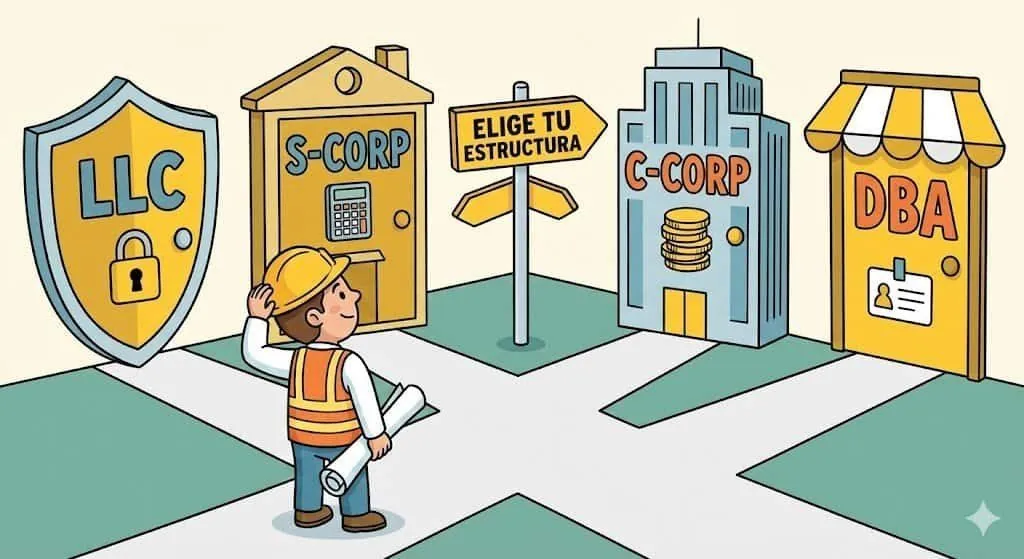
To decide whether an LLC is the best fit for you, read LLC, S-Corp, C-Corp or DBA.
What to do now
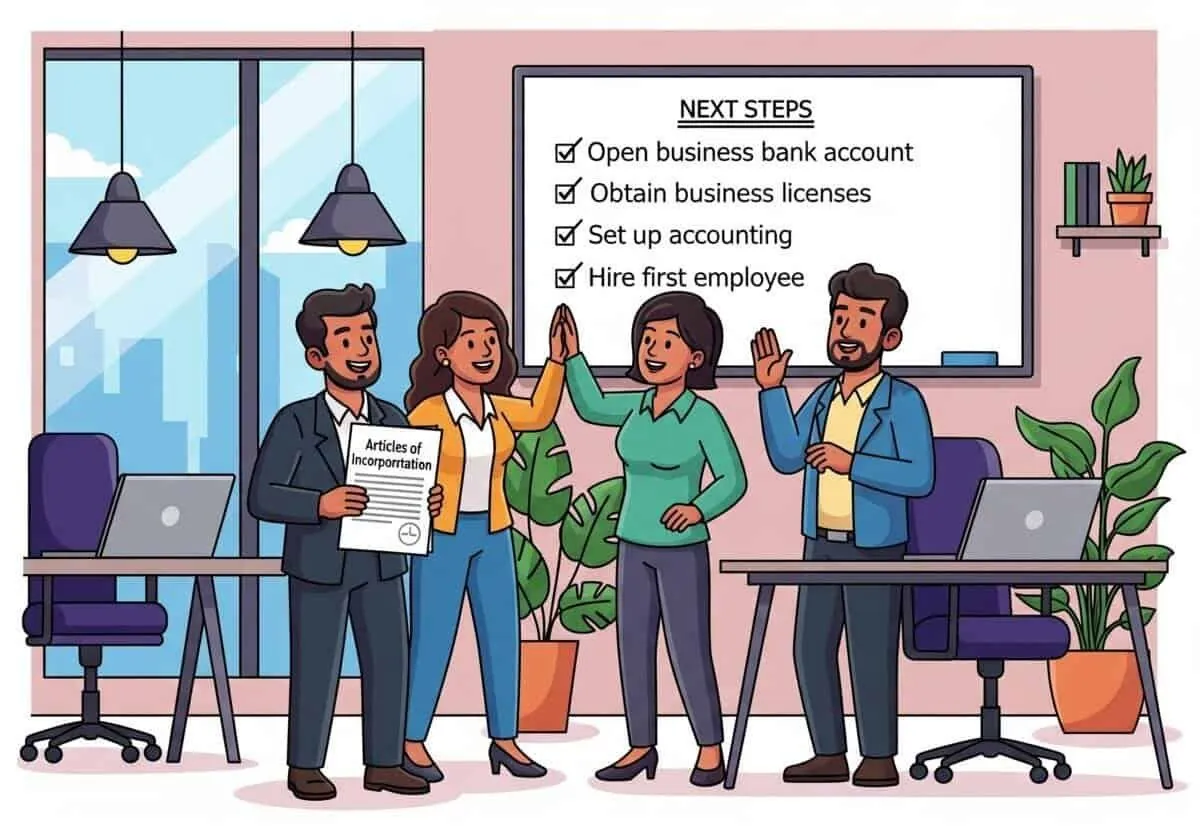
- Copy the calendar table and fill in your dates.
- Check whether your LLC already has its own CSLB license.
- Open the company bank account if you don't have one.
- Change your contracts to the company's name.
FAQ
Does my contractor license transfer to my new LLC?
No. The license is in the name of the person who got it. The LLC needs its own license with a qualifier, plus bond and insurance requirements. Check the current requirements on the CSLB's LLC page before you sign contracts in the company's name.
When do I file the Statement of Information?
Within 90 days after registering the company. After that, the LLC files it every 2 years and the corporation every year. You file online with the California Secretary of State. Confirm your exact date in your bizfileOnline account.
Do I need an EIN if my LLC has one owner?
Not always. You need one if you have employees, if you choose to be taxed as a corporation, or if the bank asks for it, among other cases. The EIN is free on the IRS website. If you are unsure, ask your tax preparer what applies to you.
When to talk to a professional
This article is a general guide. If your case involves a letter from the IRS, the FTB or the EDD, a lawsuit, an accident or a change in your business structure, talk to a lawyer, a tax preparer (CPA or enrolled agent) or the official agency. Every case is different.
How ODC helps you
At Oficina del Contratista we keep your bookkeeping up to date: we record your income and expenses, reconcile your accounts and explain your reports in Spanish. For taxes, payroll, insurance or legal matters, we connect you with independent partners; they provide those services, not ODC. See all services.
Did you just form your company? We help you organize your books from the first month. Message us on WhatsApp.
References
- CA Secretary of State – Business entities FAQ — Statement of Information and deadlines
- CA Secretary of State – Forms — LLC and corporation forms
- EDD – Register as an employer — Register within 15 days after paying more than $100
- FTB – Form 3522 (2026) — $800 annual LLC tax
- IRS – Single member LLCs — EIN and taxes for a one-owner LLC
- CSLB – LLC licensing — The LLC's own license
- USPTO – Why register your trademark — Federal trademark registration

Runs Oficina del Contratista, a Spanish-language bookkeeping service for contractors. Has experience in management, sales and construction consulting.
Important notice: this article is educational and informational only; it is not legal or tax advice. It may contain errors or be out of date. Before making decisions, check it with a licensed expert or attorney.