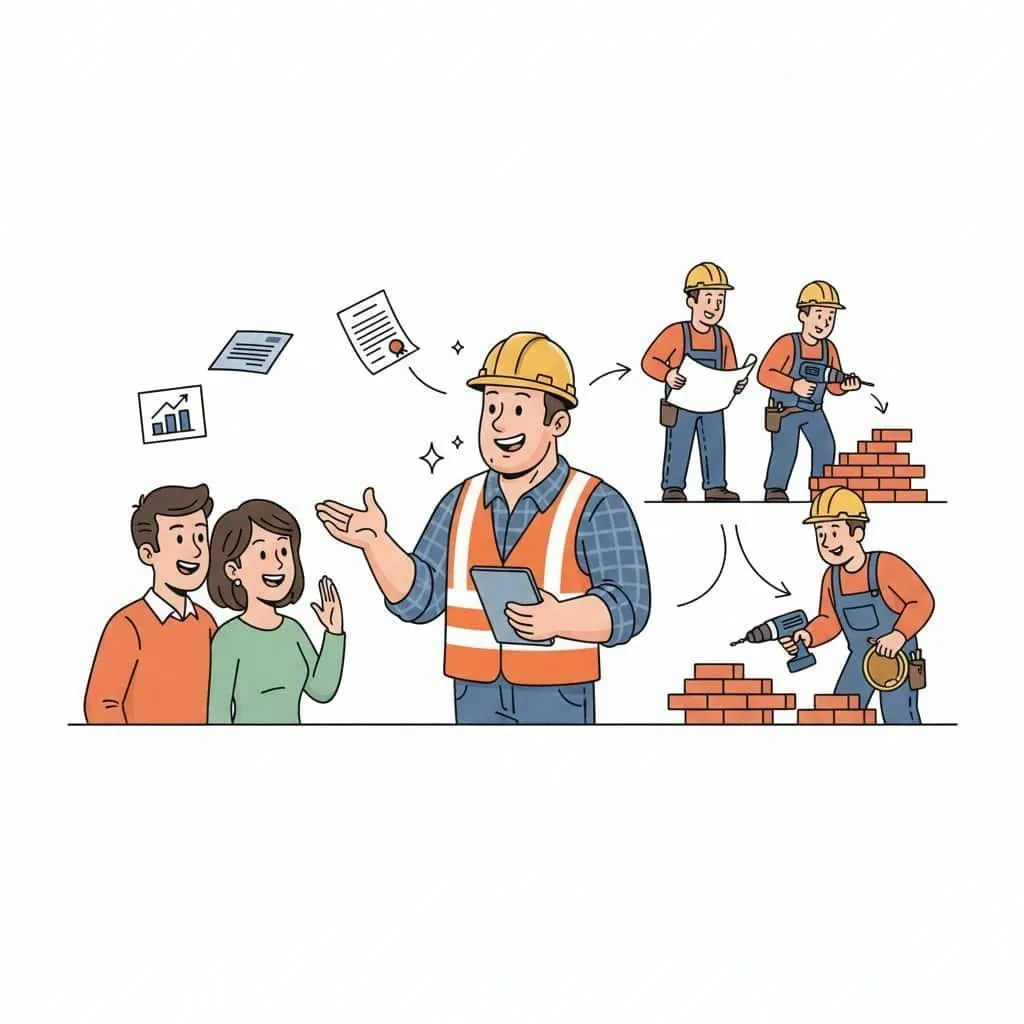
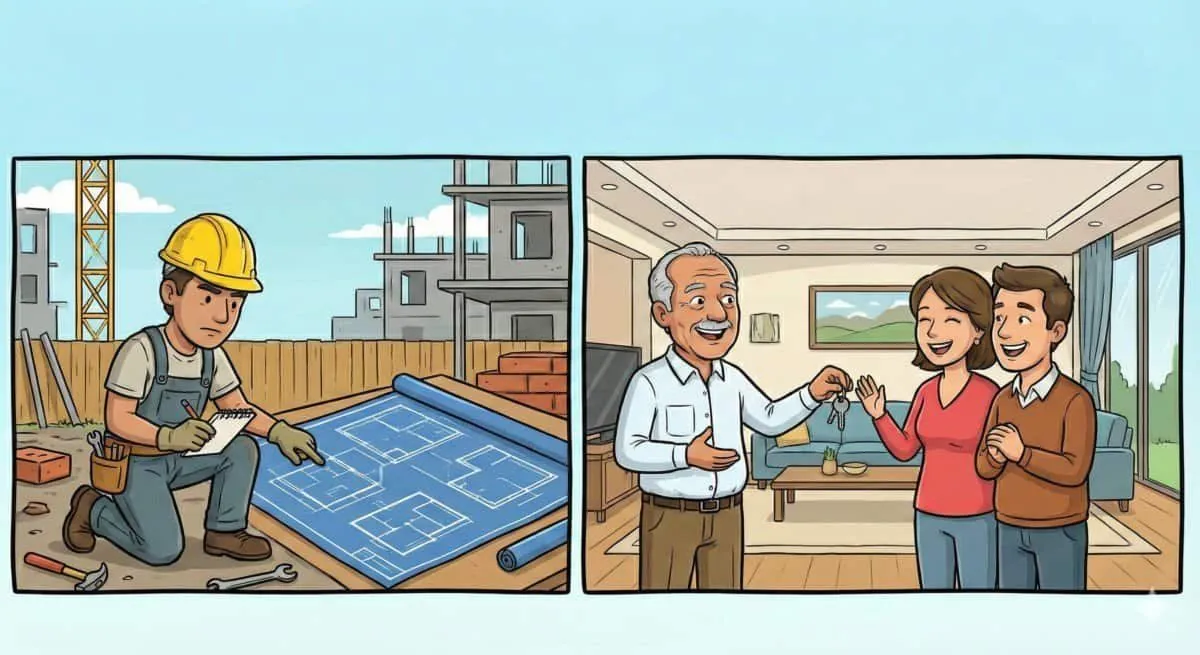
Many people in construction dream of no longer taking orders and being their own boss. The path from job-site worker to General Contractor takes much more than knowing how to use the tools.
In this episode, Armando Ehrenzweig talks with Atancio about his path of hard work and perseverance. This article summarizes what he shares and adds general information from official sources for anyone who wants to take the same step.
This is an informational summary, not legal advice. License and insurance rules can change, so confirm them with the CSLB.
In short
- Atancio talks about total responsibility: being "the boss" is not working less, but carrying more.
- Getting a General Contractor license is a big filter: it requires experience, exams, a bond, and insurance.
- Credit and liquidity (cash flow) are key to paying for materials and subcontractors before you get paid.
- If you hire employees, in California you need to plan for formal payroll and workers' comp.
The mindset: total responsibility
Atancio talks about his start in hard manual labor, where he learned the value of physical effort. The real change, he says, was in mindset.
To go out on his own, he understood that being "the boss" does not mean working less, but having more responsibilities. The desire to give his family better opportunities pushed him to study, get licenses, and learn to manage large crews. He left the comfort of being an employee to take on the risk of an entrepreneur.
The challenge of licensing and formalizing
According to Atancio, the General Contractor license is the first big filter, especially in a strict state like California. He mentions three points:
- Exams and experience: it is not just paying a fee; you have to show experience and technical and legal knowledge.
- Bonds and insurance: before you start, you must have your bonds and insurance ready.
- Leaving informality behind: moving to contracts, legal compliance, and projects where the rules are stricter.
What the CSLB says about the license
The CSLB (Contractors State License Board) is the board that issues contractor licenses in California. In general, applicants must show trade experience, pass exams, and submit the required bond documents. The CSLB explains what experience counts and publishes the forms and applications.
The number of years, the bonds, and the fees depend on the license type and can change. Check the current requirements on the CSLB site before you plan.
Credit, liquidity, and equipment
With the license comes financial reality. Atancio and Armando talk about two pillars that trip up many new contractors.
Credit and liquidity
You need to build business credit to buy materials and pay subcontractors before the customer pays you. Without cash flow to get through late payments, the business drowns. For example: you pay for the concrete and the crew today, but the customer pays in 45 days. Up-to-date books show you how much cash you need for that wait.
Personnel management
Atancio stresses that hiring cheap ends up costing more. For him, it is important to use formal payroll and carry workers' comp.
In California, the CSLB requires licensees to carry workers' comp if they have employees, or to file an exemption if they don't. If you don't comply, your license can be suspended. To understand the insurance better, read how well protected your business is against a workplace accident.
Growth lessons
Success does not come from luck, but from daily decisions in finances, operations, and networking (relationships). Armando and Atancio encourage those who want to go out on their own to plan the move with good guidance on finances and insurance, from day one.
What to do now
- Check the CSLB for the license classification you need and its current requirements.
- Gather proof of your trade experience.
- Calculate how much cash you need to cover materials and payments before you get paid.
- Ask an insurance agent about bonds and Workers' Comp.
- Set up separate books for the business from the start.
When to talk to a professional
Talk to the CSLB about license requirements, to an insurance agent about bonds and coverage, and to a lawyer if you have questions about contracts or worker classification. For taxes, consult a tax preparer, CPA, or enrolled agent.
How ODC helps you
At Oficina del Contratista we keep your books up to date with bookkeeping for contractors and offer business consulting with Armando. You can also read finances and profitability to organize your business from the start.
Watch the video on YouTubeReferences
- CSLB: Qualifying experience — experience that can count toward the exam
- CSLB: Workers' compensation requirements — Workers' Comp or exemption for licensees
- CSLB: Forms and applications — license forms and applications
This article is for information and education only. It is not legal, tax or bookkeeping advice. We are a bookkeeping service: for tax matters, consult a tax preparer, CPA or enrolled agent.
Do you want to know how your business is really doing?
Message us or call us. We answer in Spanish, no strings attached.
Message us on WhatsAppThis article is for information only and is not a substitute for legal advice.