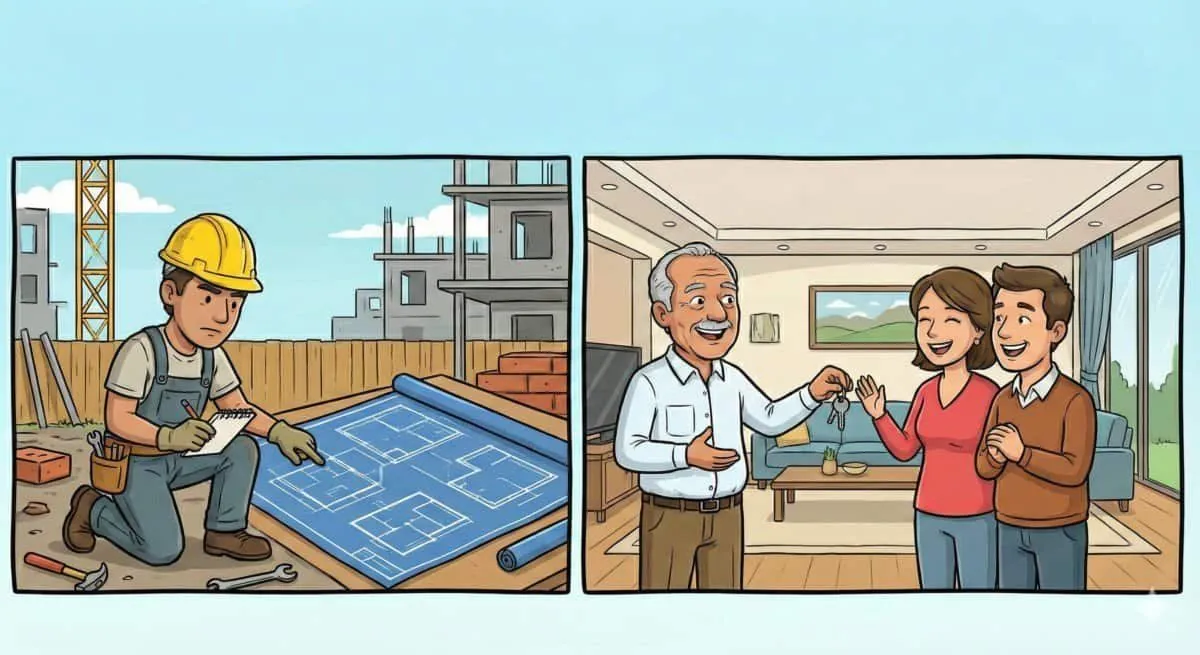

You answer the phone, do the estimate, visit the job, and close the contract. If you get sick for a week, sales stop. This is common among owners of roofing, concrete, landscaping, and remodeling businesses.
This article is for the contractor who wants to stop being the only salesperson in the business. You will see how to organize the sales process, what to delegate first, and how to choose the right person. It is educational information, not a guaranteed formula.
In short
- If all sales depend on you, your business grows only as far as your hours reach.
- First write down the sales process; then delegate, step by step.
- The business needs a system that others can repeat, not a salesperson identical to you.
- When hiring, look at attitude and technical knowledge together; the weight of each depends on the position.
- There is free or low-cost mentoring for business owners through the SBA.
Why selling everything yourself holds your business back
When you are the only one selling, your time is the limit. Every hour on an estimate is an hour you are not on the job, collecting, or supervising.
There is also risk. If customers trust only you and not the company, the business is fragile. A clear process makes the company easier to run, to grow, and, over time, to hand over to others.
The SBA (the federal agency that supports small businesses) offers guidance on managing and growing your business, including topics like staffing, planning, and finances.
"No one will do it like me": how to handle the fear of delegating
It is a normal fear. You learned the trade and you protect the quality of your name.
But delegating doesn't mean letting go of everything. It means handing off a task with clear instructions and reviewing the result. Your goal is not for someone to sell exactly like you. It is for the customer to get a clear estimate, on time, at the company's standard.
Step 1: write down your sales process
Before hiring, write down how you sell today. For example, for a roofing contractor:
- The call or message comes in and the name, address, and type of job get written down.
- The visit is scheduled and confirmed the day before.
- Measurements and photos are taken during the visit.
- The estimate is sent in writing within a set time (for example, 48 hours).
- Follow up by phone or message the next day and again a week later.
- If the client accepts, the contract is signed and the deposit allowed by law is requested.
Add an estimate template, a list of questions for the customer, and the prices or ranges each person may offer. That is your "repeatable system."
Step 2: delegate in stages
You don't need to build a sales department all at once. Delegate in this order:
- Answering and scheduling: an office person or an answering service.
- Measure and quote simple jobs: an estimator with your templates and prices.
- Follow-up: reminders to customers who haven't responded.
- Closing big jobs: at the end, or with your support, until you see results.
Review each stage with simple numbers: how many estimates are sent, how many are accepted, and how long each response takes. If something fails, fix the process before blaming the person.
How to choose a salesperson: attitude and aptitude
Many owners say they look for "the one who is hungriest," not the most technical. It makes sense: attitude, punctuality, and follow-up discipline are hard to teach quickly. But it is not a rule for every case.
A salesperson with no technical background can promise things the job cannot deliver. A technical expert with no interest in selling can leave customers without answers. The smartest approach is to find a balance and define what the position needs.
To decide, try real tasks: ask the person to write a sample estimate or make a follow-up call. Then train them on any technical skills they lack.
Listen to the episode on Spotify
Your new role: from best salesperson to team leader
When others sell, your job changes. You set goals, review numbers, train people, and handle the tough cases.
The SBA also explains how to put together a business plan with clear goals. And mentors in its network can help you think through this step; see how to find a mentor in the SBA resource partner network.
What to do now
- Write down the steps of your sale, from the first call to the contract.
- Make an estimate template and a list of questions for the customer.
- Pick just one task to delegate this month (for example, scheduling visits).
- Define 3 numbers to measure: estimates sent, accepted, and response time.
- Review the results every week and adjust.
When to talk to a professional
If you are going to hire your first sales employee, talk to an attorney or a tax preparer, CPA, or enrolled agent. They will tell you how to classify the worker (employee or independent contractor), how to pay commissions, and which rules apply in your state. This depends on each case.
How ODC helps you
At ODC, we keep your books up to date so you know what it costs to sell and how much each job leaves you, so you can delegate with clear numbers. Learn about our bookkeeping for contractors service and our business consulting. You may also like Busy or Productive?.
References
- SBA: Manage your business — federal guidance for running and growing a small business.
- SBA: Find a business mentor through SBA's Resource Partner Network — free or low-cost mentoring and counseling (SCORE and SBDC).
- SBA: Let your business plan map your path to success — how to build a plan with goals and a sales strategy.
This article is for information and education only. It is not legal, tax or bookkeeping advice. We are a bookkeeping service: for tax matters, consult a tax preparer, CPA or enrolled agent.
Do you want to know how your business is really doing?
Message us or call us. We answer in Spanish, no strings attached.
Message us on WhatsAppThis article is for information only and is not a substitute for legal advice.