Many roofing owners work from sunup to sundown: they sell, coordinate crews, and race the rain. But the paperwork, insurance, numbers, and roof safety get left for later.
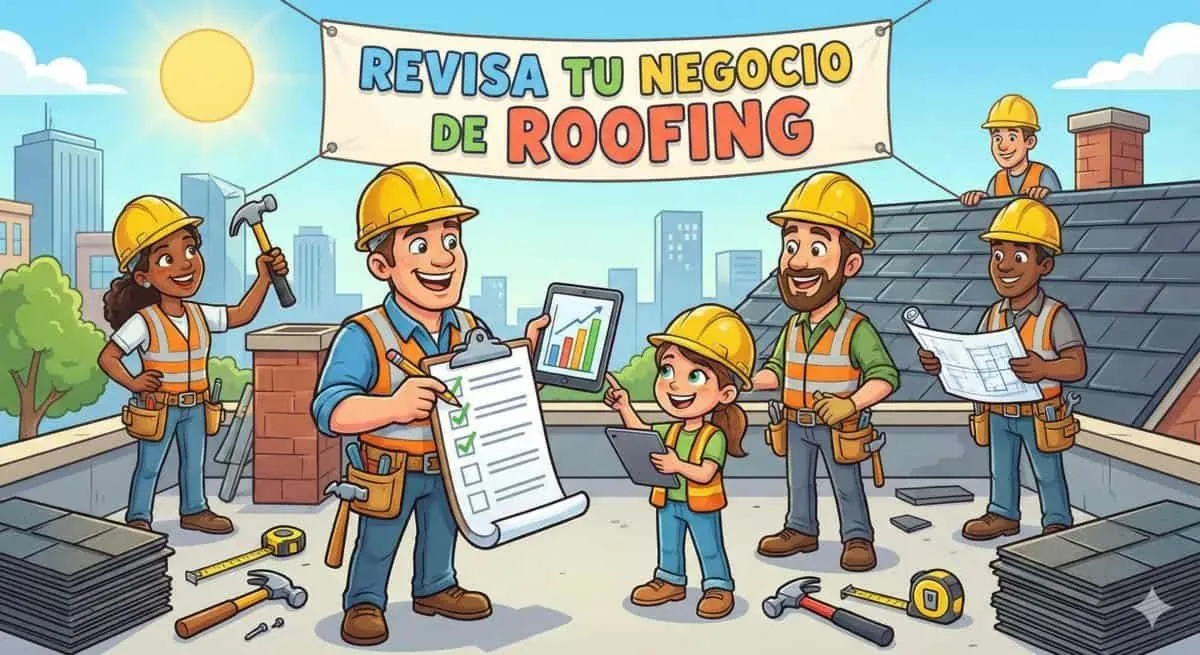
This article is an annual checklist for roofing company owners. In about 15 minutes, it helps you see where you may have gaps in structure, insurance, finances, safety, and contracts.
This is general, educational information, not legal, tax, or insurance advice. The rules depend on your case and your state.
In short
- A suspended entity in California loses rights and privileges to do business. Check your status every year.
- Mixing personal and business money does not remove your protection by itself, but it can be used against you.
- Falls are a central risk in roofing. OSHA requires protection starting at 6 feet in construction; in California, Cal/OSHA rules also apply.
- Read your policy: limits, exclusions, and what happens with subcontractors.
- Knowing your real cost per job (job costing) tells you which roofs actually leave a profit.
Step 1: Legal structure and documents for your roofing company
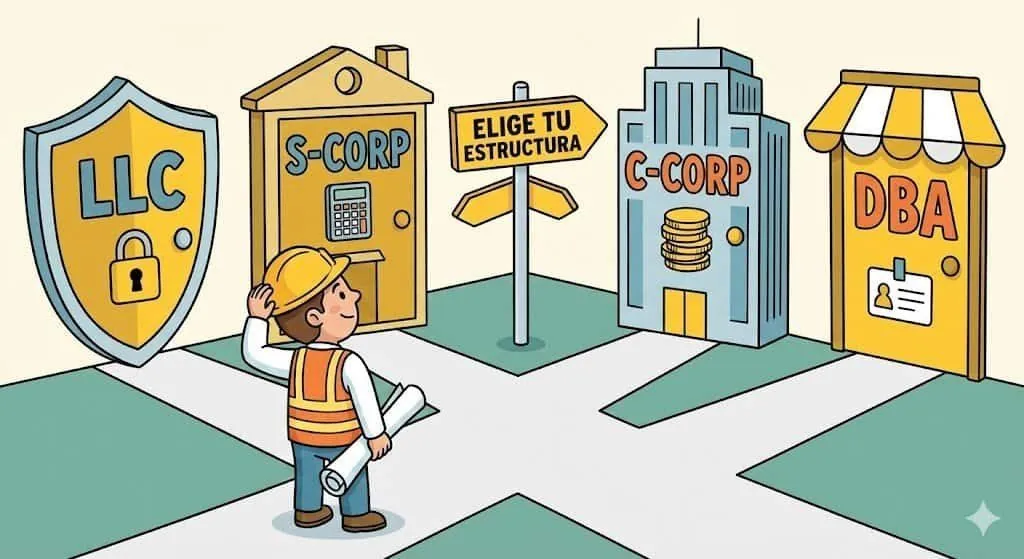
Opening an LLC online is a good start, but the work continues afterward. An entity that is not maintained can lose the protection you expected. A business attorney can tell you how it applies in your case.
Legal checklist
- Active entity: confirm with the Secretary of State that your LLC or corporation is active. Check that you have paid the franchise tax (franchise tax) and that your registered agent (the person or company that receives legal documents for you) is current.
- If you were suspended: according to the Franchise Tax Board (FTB), a suspended business is not in good standing and loses rights, powers, and privileges to do business in California. Its contracts may be voidable. That does not automatically mean you have "no protection." A judge decides what happens with your personal liability based on the case. What you should do is resolve the suspension soon with an attorney or tax preparer.
- Up-to-date documents: keep your operating agreement (the contract between partners) and your minutes. They help show how decisions are made. Check whether your agreement requires annual meetings.
- Separate money: use a business account and card only for the business. Mixing funds (commingling) does not automatically pierce the corporate veil, but it is one of the factors a judge may consider, along with others. It also makes your books confusing.
Step 2: Roofing insurance, what to check in the policy
An insurance certificate doesn't tell you what the policy covers. Every policy is different. Ask your agent to explain in writing what is and isn't covered.
Insurance checklist
- Limits: review your liability limits and whether your contracts or customers require minimums. There is no "standard" number for everyone.
- Exclusions: ask whether your policy has exclusions or limits for any of these items. They are examples of what some policies may include; not all do.
- Height of the work (number of stories).
- Hot work, such as a torch on flat roofs.
- Condos, townhomes, or multi-unit buildings.
- Rain damage when the roof is open.
- Subcontractors: if you use them, ask for their current certificate of insurance and ask your agent whether you should be named as an additional insured. Also ask how your policy's year-end audit is handled.
- Employees: if you have employees, confirm your workers' compensation coverage with your agent or the DIR.
Step 3: Roof Safety and Fall Protection (OSHA)
Falls are a central risk in roofing. The federal rule is OSHA 29 CFR 1926.501. In construction, it requires fall protection when there is an unprotected edge 6 feet or more above the level below. In California, Cal/OSHA rules also apply; they are below.
Fall protection checklist by roof type
- Low-slope roof (4:12 or less): protect with a guardrail (guardrail), a safety net or a personal fall arrest system (harness). The standard also allows combining warning lines with other systems or with a safety monitor. Each option has conditions; check the standard.
- Steep-slope roof (more than 4:12): the standard calls for a guardrail with toeboard, a safety net, or a harness. Warning lines are not an option on steep roofs.
- Residential construction: the general rule is conventional protection (guardrail, net, or harness) starting at 6 feet. If you can show it is not feasible or would be more dangerous, OSHA requires a written plan for each job, under 1926.502(k). OSHA has frequently asked questions about fall protection in residential construction.
- Holes and skylights: cover them or guard them. A skylight is an opening someone can fall through.
- Training: train each worker on fall hazards and on using their equipment. Keep the record.
- Equipment: check harnesses, lines, and anchors before each use.
What changes in California
California has its own state plan (Cal/OSHA), with its own rules. According to the DIR, Title 8, section 1730 requires protection on roofs more than 20 feet high, with several methods allowed. Section 1731 covers new production residential roofing: protection starting at 6 feet, and always on roofs steeper than 7:12. Which one applies depends on the type of job and the slope. Confirm it with Cal/OSHA or a safety consultant.
Step 4: Finances and costs of your roofing business
Seeing your bank balance on your phone is not running a business. You can have $50,000 today and owe $60,000 in materials and payroll next week.
Financial checklist
- Cost per job (job costing): do you know how much you made on each project? Compare income against real costs: materials, labor, permits, dump fees, gas, and commissions.
- Overhead: add up what it costs to keep your business open each month even if you sell nothing: insurance, trucks, office, your salary, and marketing.
- Books up to date: keep your numbers updated every month, not just before taxes. A tax preparer, CPA, or enrolled agent who knows construction helps you with the tax side.
Step 5: Written contracts and processes
A healthy business does not depend on the owner's memory. It depends on clear contracts and written processes.
Operations checklist
- Contracts: review them every year with an attorney. Ask whether they cover material price increases, pre-existing damage, mold, and the payment schedule.
- Change orders: when you tear off the shingle, it is common to find damaged wood. Set up a signed process to charge for the extra work before you do it.
- Photos and daily reports: take photos before, during, and after. They are good backup if there is a claim.
What to do now
- Check today the status of your entity with the Secretary of State and the FTB.
- Ask your agent for a written summary of limits and exclusions.
- Make a list of your crews, equipment, and fall protection training.
- Pick your last three jobs and calculate the real profit on each.
- Make a plan to fix the gaps, one by one.
When to talk to a professional
Talk to an attorney if your entity is suspended or if there is a lawsuit. Talk to your agent about insurance. Talk to a safety consultant or Cal/OSHA about fall protection. And talk to a tax preparer, CPA, or enrolled agent about taxes.
How ODC helps you
At ODC we keep your books (bookkeeping) up to date so you can see income and costs by job. Learn about our bookkeeping service and business consulting. You can also read how well protected your business is against a workplace accident.
Taxes, insurance, and legal matters are handled by independent partners.
Watch the video on YouTubeReferences
- California FTB: My business is suspended — effects of a suspension.
- OSHA: 29 CFR 1926.501, Duty to have fall protection — fall protection in construction.
- OSHA: Fall Protection in Residential Construction FAQ — questions about residential construction.
- Cal/OSHA Title 8, section 1730: Roofing, all types — roofing in California.
- Cal/OSHA Title 8, section 1731: Roofing, production residential — residential roofing in California.
- NRCA: National Roofing Contractors Association — resources for roofers.
This article is for information and education only. It is not legal, tax or bookkeeping advice. We are a bookkeeping service: for tax matters, consult a tax preparer, CPA or enrolled agent.
Do you want to know how your business is really doing?
Message us or call us. We answer in Spanish, no strings attached.
Message us on WhatsAppThis article is for information only and is not a substitute for legal advice.